
-
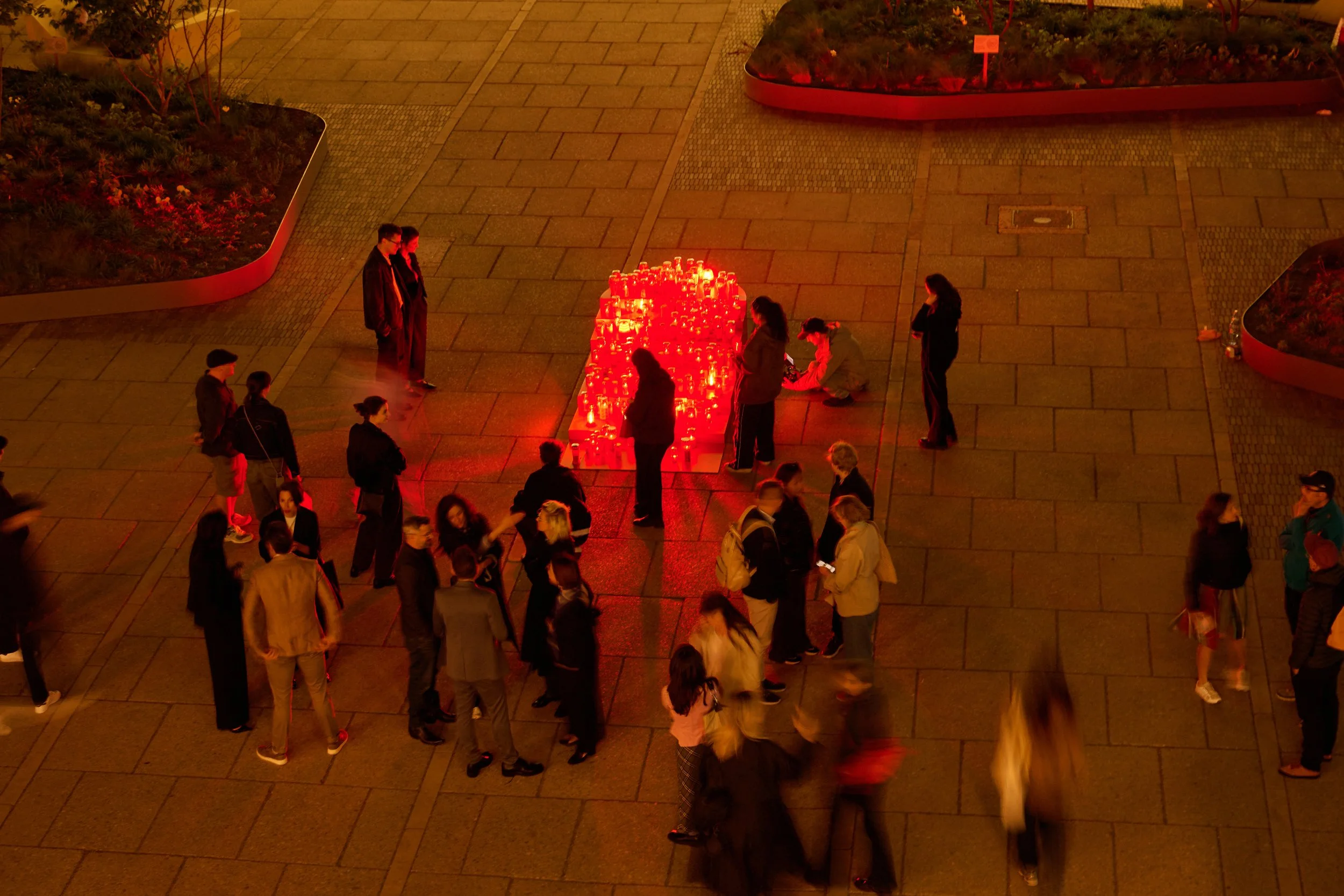
Sejla Kameric, AWAKE
April 2026 - MuseumsQuartier Vienna
September 2026 - Museums of Contemporary Art Novi Sad and Skopje
December 2026 - Kunstquartier Bethanien BerlinInitiated by the MuseumsQuartier Wien and Nomad – Croatian Office for Contemporary Art, supported by the UNIQA SEE FUTURE Foundation, NOMARTS – Kunstverein zur Schaffung von Kunstsammlungen, and the Dr Éva Kahán Foundation.
Site-specific public light installation, AWAKE transforms public space into a space reminiscent of a vigil. At irregular intervals, pulsating flashes of light break the silence. These subtle yet insistent signals momentarily shift the contemplative atmosphere, thereby calling for alertness
AWAKE explores how memory, emotion, and political urgency are inextricably linked. For one evening, visitors are invited to come together as a mindful community to light a candle and reflect on shared vulnerability. This is a call to remember and to remain actively vigilant.
Kamerić’s politically engaged practice, which transcends disciplinary boundaries, explores collective vigilance and empathy in times of political crisis. With “AWAKE”, Kamerić delves deeper into questions of identity, trauma, and memory. The installation will subsequently be on view at the Dr. Éva Kahán Foundation in Budapest and Vienna.
-

Stipan Tadic, Café Vienna
September 2026 - Parallel Vienna
Curated by Vanja Zanko / Supported by Erste StiftungStipan Tadić’s new Café Vienna series continues his long-standing engagement with the city as both subject and protagonist. Working across painting, drawing, collage and artist books, Tadić approaches urban space as a living organism: a structure made of architecture, infrastructure, memory, migration, humour, social rituals and everyday encounters.
In this new body of work, Vienna appears not through its official monuments, but through cafés, grill restaurants, bus terminals, bakeries, late-night interiors and neighbourhood meeting points. Places such as Lepa Brena Café, Café Rüdigerhof, Erdberg Busterminal, Berliner Döner, Café Select, Balkanika Grill, MMM Espresso, Twiks Café, Cafe Bar Laby and Kod Kuma form an alternative map of the city — one shaped by diasporic communities, informal economies, transit, food, language and friendship.
The works combine direct observation with memory and narrative compression. Their collaged and drawn surfaces often resemble urban diaries, comic-book frames, personal archives and social cartographies at once. Vienna is not represented as an abstract European capital, but as a lived and layered place.
-
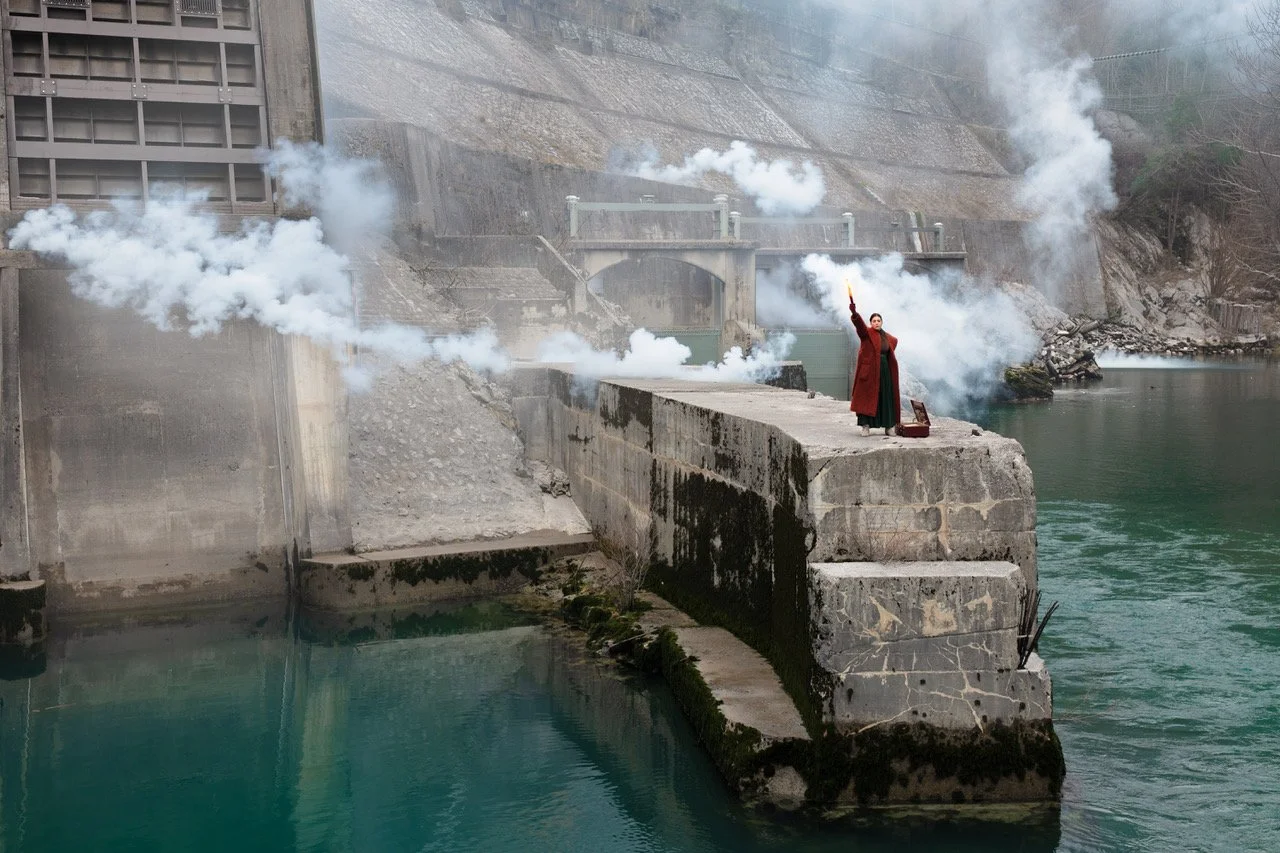
Jasmina Cibic, The Blackout
November 2026 - Obalne Galerije Piran
November 2026 - Talbot Rice Gallery Edinburgh
January 2027 - Sharjah Biennial
September 2027 - MuseumsQuartier ViennaThe Blackout is set inside a fascist-era hydroelectric plant and stages a fictional policy hearing where art and culture are put on trial — its dialogue drawn entirely from political speeches, government and NGO reports, and interviews with military analysts and economists — until their erasure emerges not as tragedy, but as protocol. As infrastructure falters, five figures debate what must be sacrificed in a moment of systemic crisis, exposing how cultural value is redefined when sovereignty falters and memory becomes commodity.
The work is conceived as an expanded film installation that will function in multiple forms — from a single screening to a large-scale immersive environment with multiple screens and scenography, accompanied by a publication focusing on the collected research material and essays by art and culture professionals responding to the themes raised by the project. This gives the work a multiplicity of afterlives and an ability to transcend territory and time.
-

Marko Tadic, Postcards
April 2027 - Zagreb and Vienna
Edited by Karla Pudar / Designed by Rafaela Drazic / Published by Verlag für Moderne KunstFor more than two decades, postcards have occupied a special place in Marko Tadić's artistic vocabulary. Collected from flea markets, archives and forgotten personal collections, they function simultaneously as historical documents, souvenirs, fragments of memory and points of departure for new narratives. By drawing, cutting, collaging and intervening directly on these found images, Tadić transforms them into speculative landscapes where personal and collective histories intersect.
His forthcoming artist's book, Postcards, celebrates this enduring fascination with the postcard as both object and medium. Neither simply a publication nor merely an archive, the book brings together a constellation of images that reflect Tadić's long-standing exploration of memory, travel, architecture and the poetics of everyday life. Moving between documentation and fiction, nostalgia and imagination, the familiar and the uncanny, Postcards reveals how modest printed ephemera can become a powerful vehicle for reconstructing places, histories and forgotten futures,
-
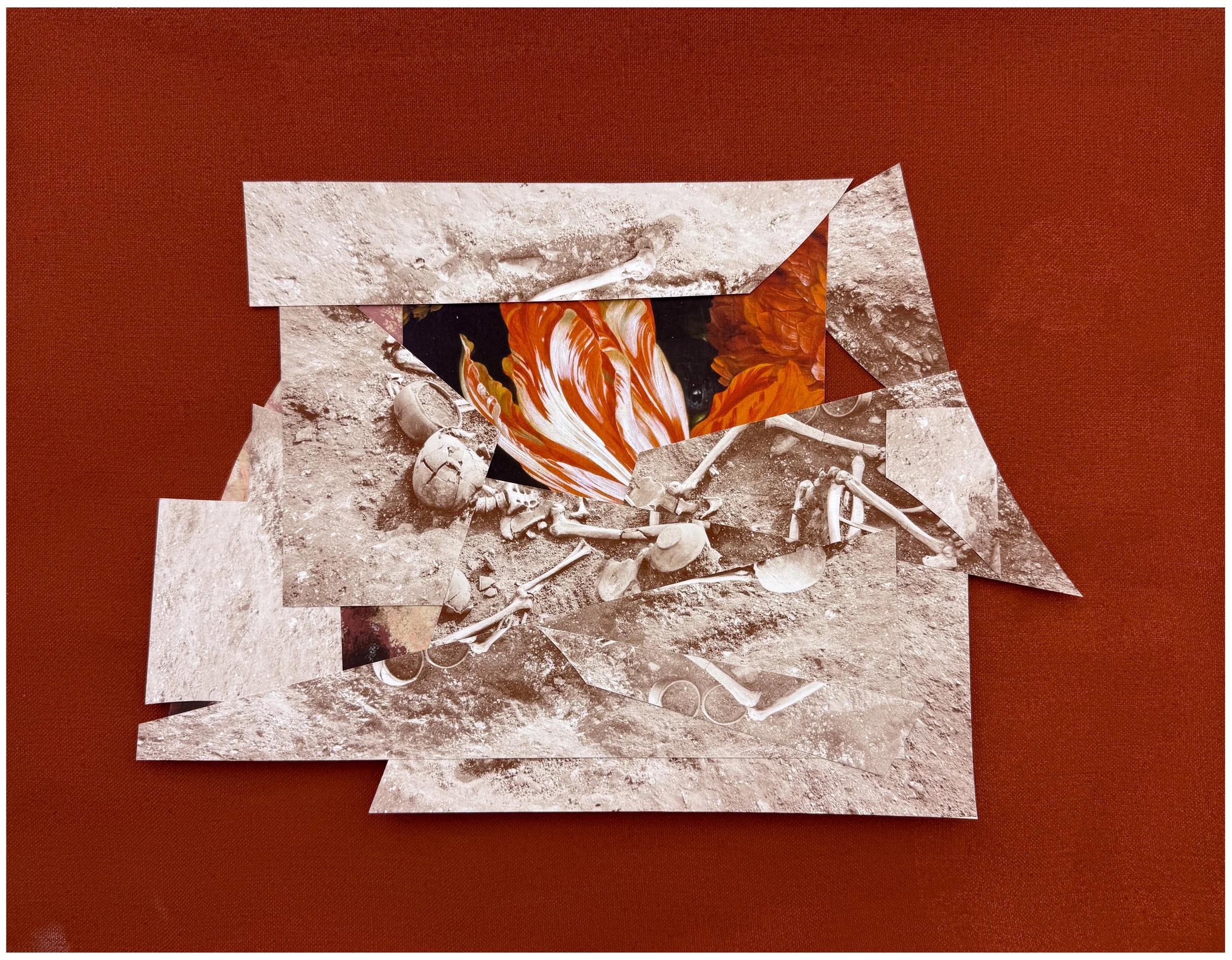
Zlatan Vehabovic, Songs of Chaos
December 2028 - Croatian Association of Artists
Since the beginning of 2025, themes have emerged in Vehabović’s work that move beyond individual memory alone. The new paintings touch upon a broader sense of instability, inner and social disorder, fragments of language, the nature of the image, poetic association and the question of how one can think and paint in a world that constantly breaks into pieces. It is from this space that the working title SONGS OF CHAOS emerges.
Vehabović’s project An Atlas of the Lesser World was one of the key chapters of his practice to date. Developed in relation to the collections and archives of the Museum of Arts and Crafts in Zagreb, the project opened the question of how images, documents, personal memories and museum fragments can once again become active material for imagination.
After completing Atlas, Vehabović entered a period of drifting, internal reorientation and renewed contact with his own interests. For him, a major exhibition does not only mean the production of works, but a long occupation of mental space. Each such project takes up a significant part of the artist’s attention, imagination and psychic energy. Afterwards, a period is needed in which the work gathers itself again, in which thought slowly returns to itself and begins to search for its next form.